
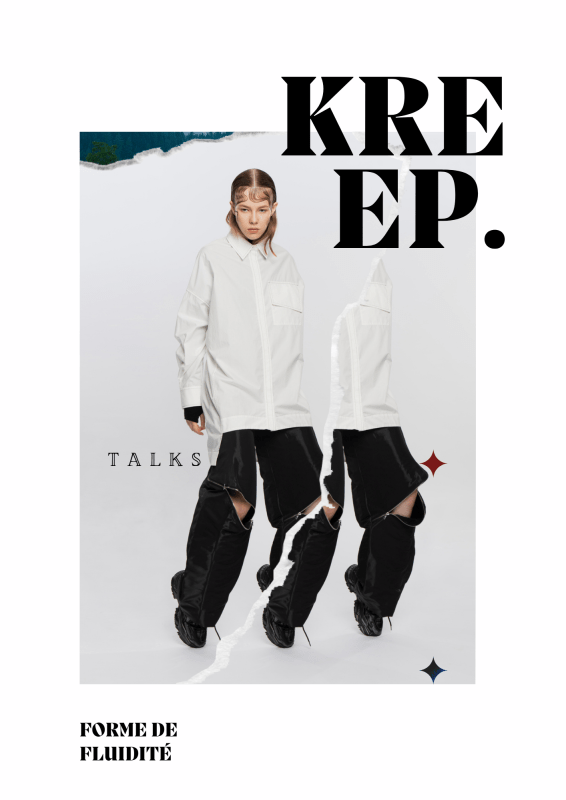
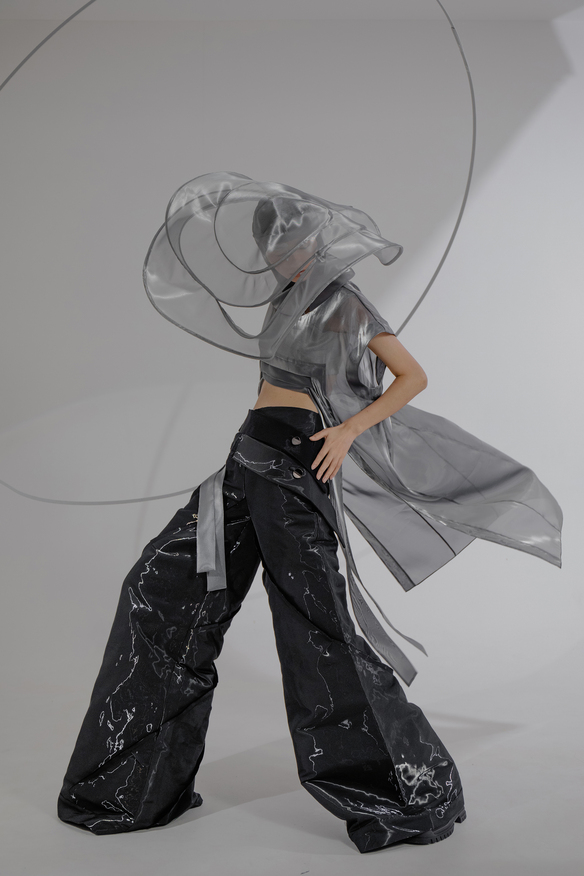
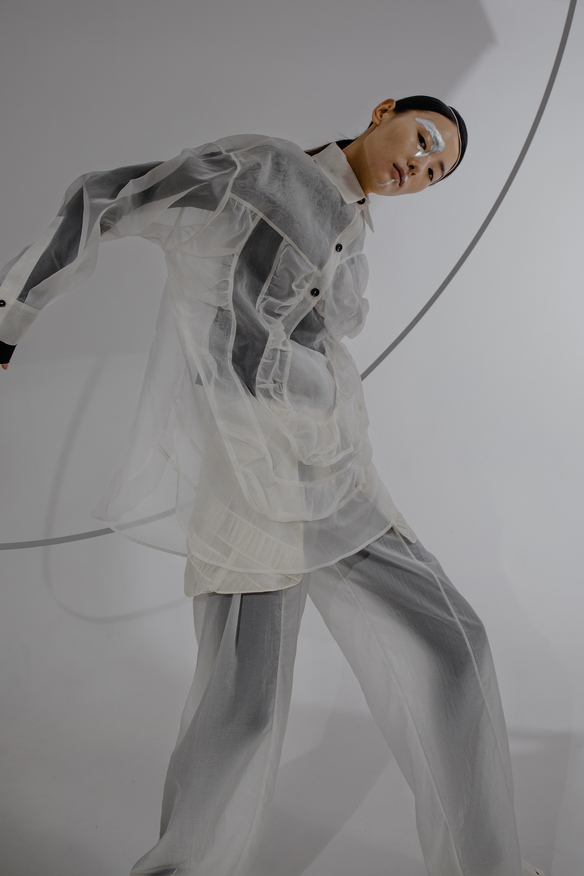
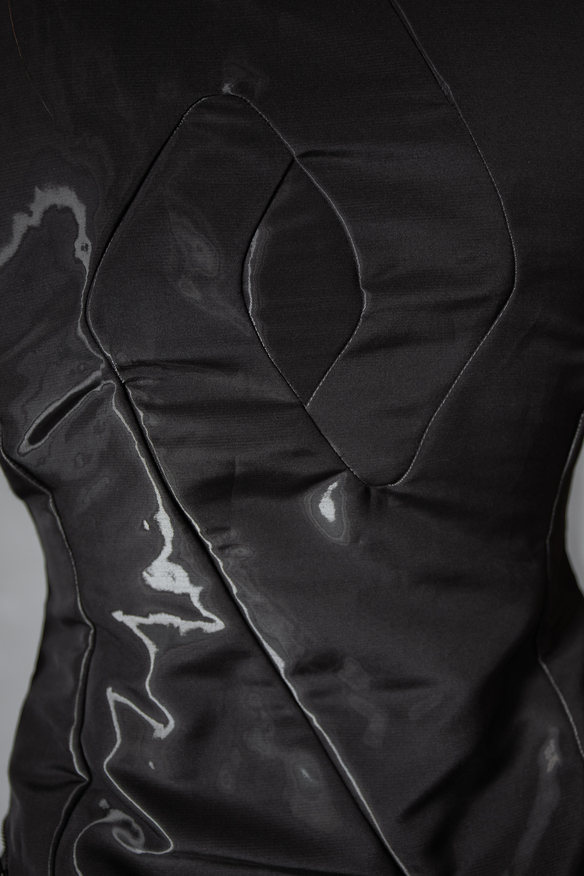
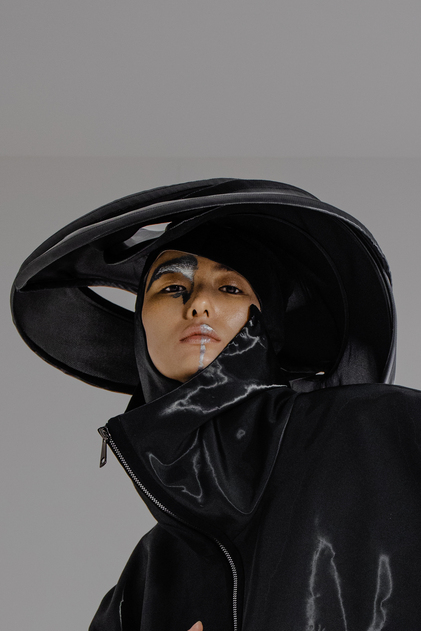
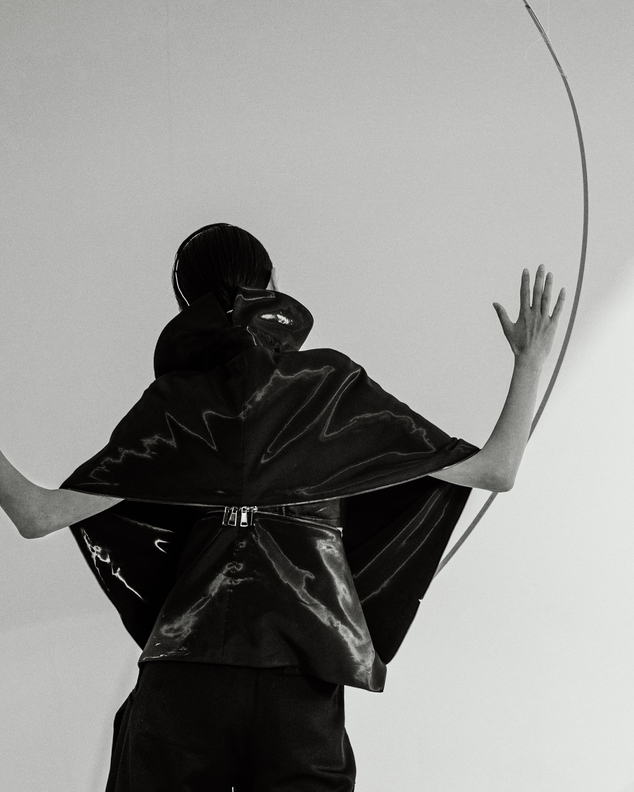
FORME DE FLUIDITÉ is a womenswear designer brand for daily occasions founded by architect, Sophia XiNLI. The brand’s creations merge structural form and sensuous texture inspired by art and architecture, evoking a sense of edgy and artistic wonder. With a passion for exploring the implicit intertwining of form and emotion the brand challenges the traditionally accepted role of daily clothing to arouse the wearer’s aesthetic resonance and express an alternative approach of contemporary femininity.


Sophia XiNLI, the founder of FORME DE FLUIDITÉ, practised as an architect in Shanghai and Hong Kong for more than 10 years.
She has been involved in a series of high profile architectural and interior projects as project leader, including the first Mercedes Me Store in Hong Kong and the award-winning Nan Wan clubhouse in Guangzhou, China.
Having painted since childhood, later developing an interest in photography, this along with her architectural design work has formed Sophia’s lifetime devotion to explore the implicit connection between physical form and spiritual perception.
Sophia‘s passion for clothing design has been a natural progression from her architectural design work in which she had a love of form and detail. After determining to pursue her career in fashion she attended Central Saint Martins to ground herself in draping and then became apprentice to an experienced tailor to equip herself with essential pattern-making and sewing skills. In 2020, Sophia founded FORME DE FLUIDITÉ as a more personal and spiritual platform to express her philosophy of design and aesthetics.


THE INTERVIEW
Can you tell us a little about your childhood cultural background and when you decided to enter the fashion industry after being an architect for almost ten years?
I was born in an industrial city in China in the 80’s. Back then the national education mainly focused on logic and science knowledge whilst art education was not encouraged. But I had developed a passion for painting by myself and studied it in my spare time throughout my whole childhood. Later I chose architectural design as my major in university, which is also a combination of science and art. I guess this balance between rational and emotional thinking has always been with me ever since.
After years of working as an architectural designer, I came to realise that I really wanted to create a platform of my own to allow me to express my design philosophy freely, without constraints. I knew this passion would be a wider exploration beyond the architectural world and I have been passionate about fashion for quite some time -so, naturally, that looked like the way forwards for me. In fact, I saw fashion as smaller scale architecture. I believed that in combining my architectural thought with fashion, I could create something very different and interesting. Those were the foundations of my brand, FORME DE FLUIDITÉ.
How does your creative process work and is important is technology software for your brand FORME DE FLUIDITÉ ?
My way of thinking always begins with 3-dimensional space. That is how I start designing. Most of the time I start constructing my design by draping the fabric directly onto the mannequin. Sometimes I use paper to build a small-scale mockup in the same way as building a small model in architectural design. For more complex shapes I use 3D software to help me visualize the design. Once the basic form of the design is set, I will translate into a fashion language that pattern makers understand to develop the design and they will produce the sample.


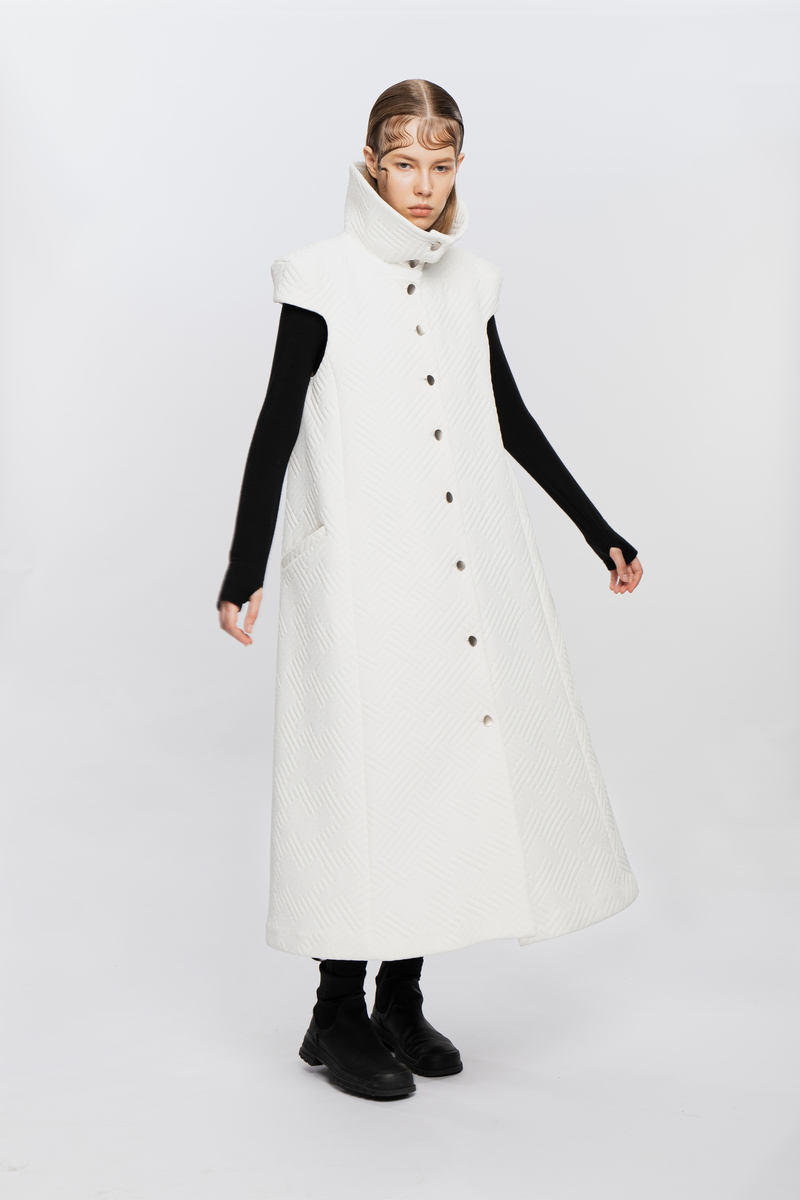
Is there a better way to describe your clothes than futuristic or high-tech?
I use my designs to explore the perception of space through the language of fashion. In this way, the creations are non-traditional and unique. My work aims to present a sense of futurism and the avant-garde, because I hope they will invest in people with a sense of vision and strength for the future.
How crucial was your education in architecture before launching FORME DE FLUIDITÉ?
My education in architecture has shaped who I am and how I think. For a brand, the most important element is what sets you apart from the others. My architectural background provides me with the unique DNA for my brand. But, at the same time, the fact that I come from outside of the fashion industry has also brought obstacles to my business, such as lack of certain knowledge, information and connections at the beginning. I had to study and work even harder to conquer these difficulties.


What’s it like to see someone wearing your creations?
Those are huge moments of achievement for me. It’s a very good feeling to see your creation has become part of other people’s journey. Also, to create is a way of communication. When other people are wearing my creation that means the messages have been well received and the communication has been fulfilled.
How challenging is the business part for a brand like yours and what do you want to achieve through fashion?
It’s very challenging. My education and background had nothing to do with running a brand and business. And this industry is one of the most saturated and competitive. Plus, we started with a very limited budget. Overall, every part outside of design is a challenge for me. But I’m very excited about choosing this path. Integrating my architectural thinking into fashion, I believe I will create something that goes beyond my current imagination and bring something meaningful to the design industry.
How has your training as an architect influenced your thinking?
In architecture, the most important concept and element is Space. The space is the core of a building, where its function and meaning can be fulfilled. The walls around the space as well as the ceiling and floors are ancillary surfaces, serving to create this space. So in the architect’s eye, we always tend to see things from a three-dimensional and integral perspective. This way of thinking affects my view of fashion design. I see interfaces of the garments as elements of a larger whole, rather than as separate decorative surfaces.
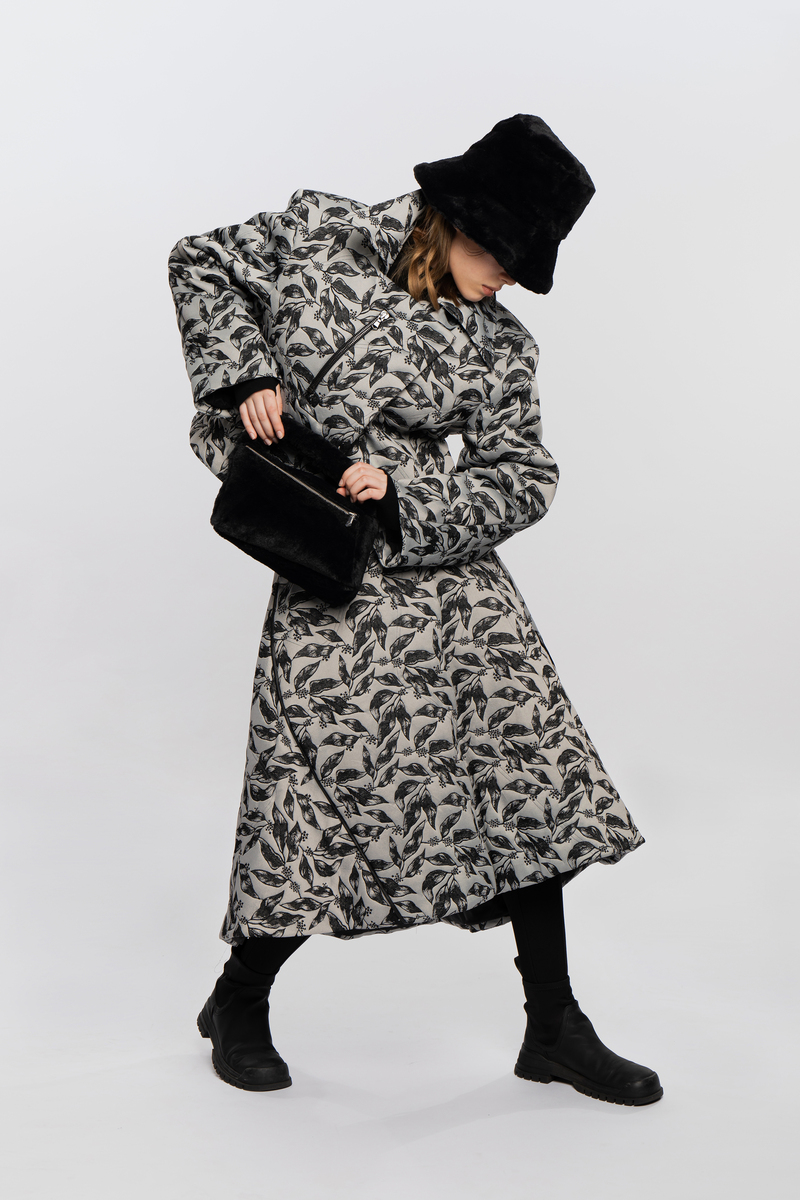

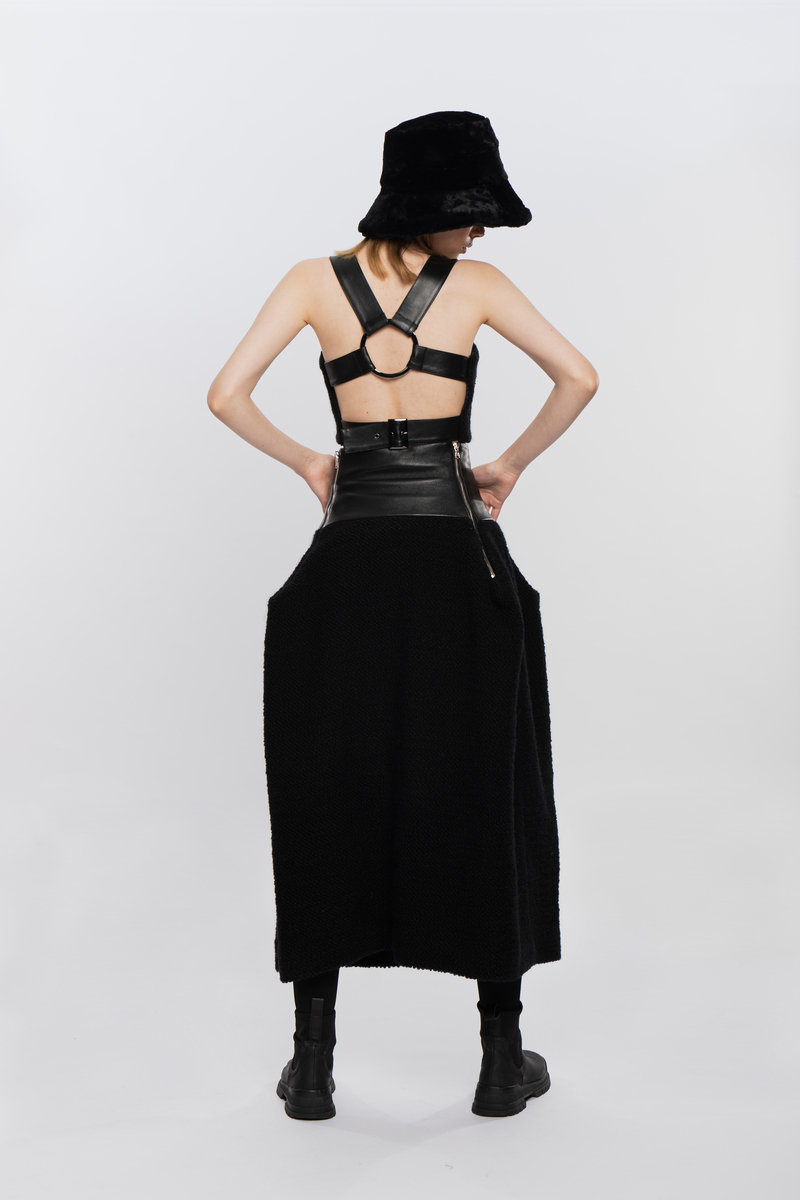
How would you describe the evolution of shape?
Fashion has such a rich history – even if you study the clothing of ancient cultures such as the dynasties of the Egyptian pharaohs you can see how clothing was used to project image and power – it’s not just for practicality. Then the couture houses really had their origins in the 18th century when designers were required to produce beautiful pieces for the powerful people in the European courts. The shape of the designs was used to flatter but was also used decoratively. So we are a part of a very long history where, in fashion, shape can be used in lots of interesting ways. We are hoping to take our part in that history and give our own unique perspective.
What would you like to accomplish in the next 10 years?
In the near future we will introduce parametric design into our work, which I have previously used in architectural design, and accordingly explore more suppliers with avant-garde technologies, – to bring more possibilities to FORME DE FLUIDITÉ and to the fashion industry.
10 years is quite a long time in such a rapidly changing era. Especially if we are going to integrate more new technology into the brand the potential and outcome are likely to be beyond current definition. But I believe it will be an exciting future.





 KREEP.