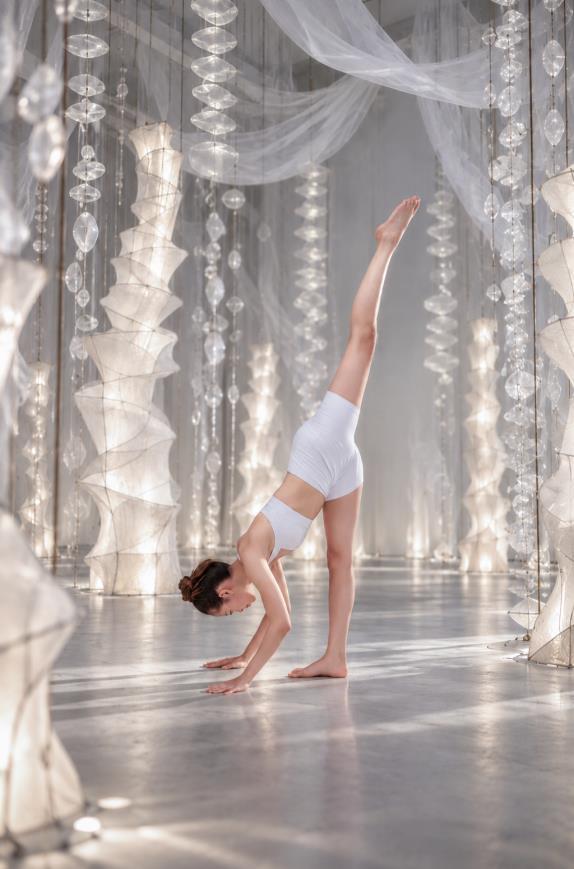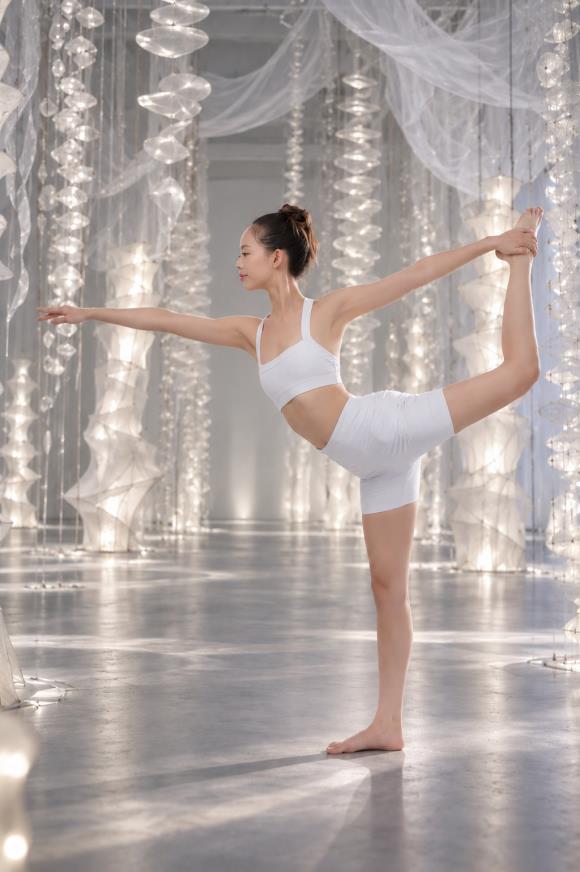
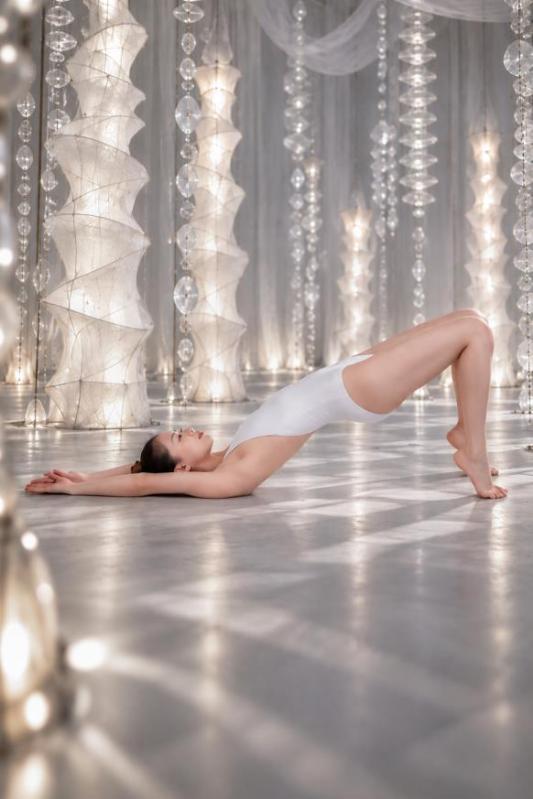
In Hanghang Li’s proposed installation, glowing forms and translucent materials create a quiet landscape for movement. At its centre is a question: what does the body remember, even when the mind has forgotten?
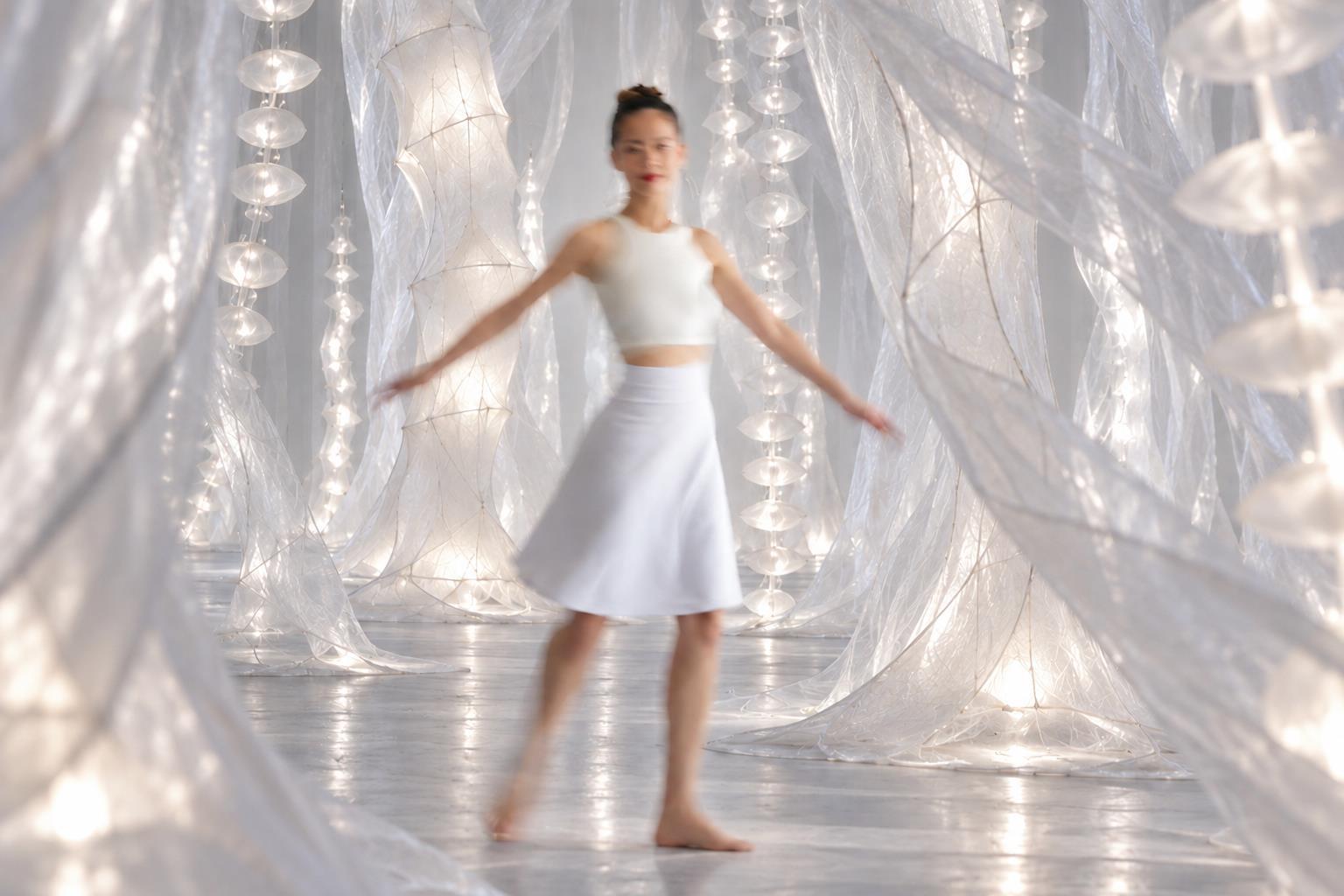
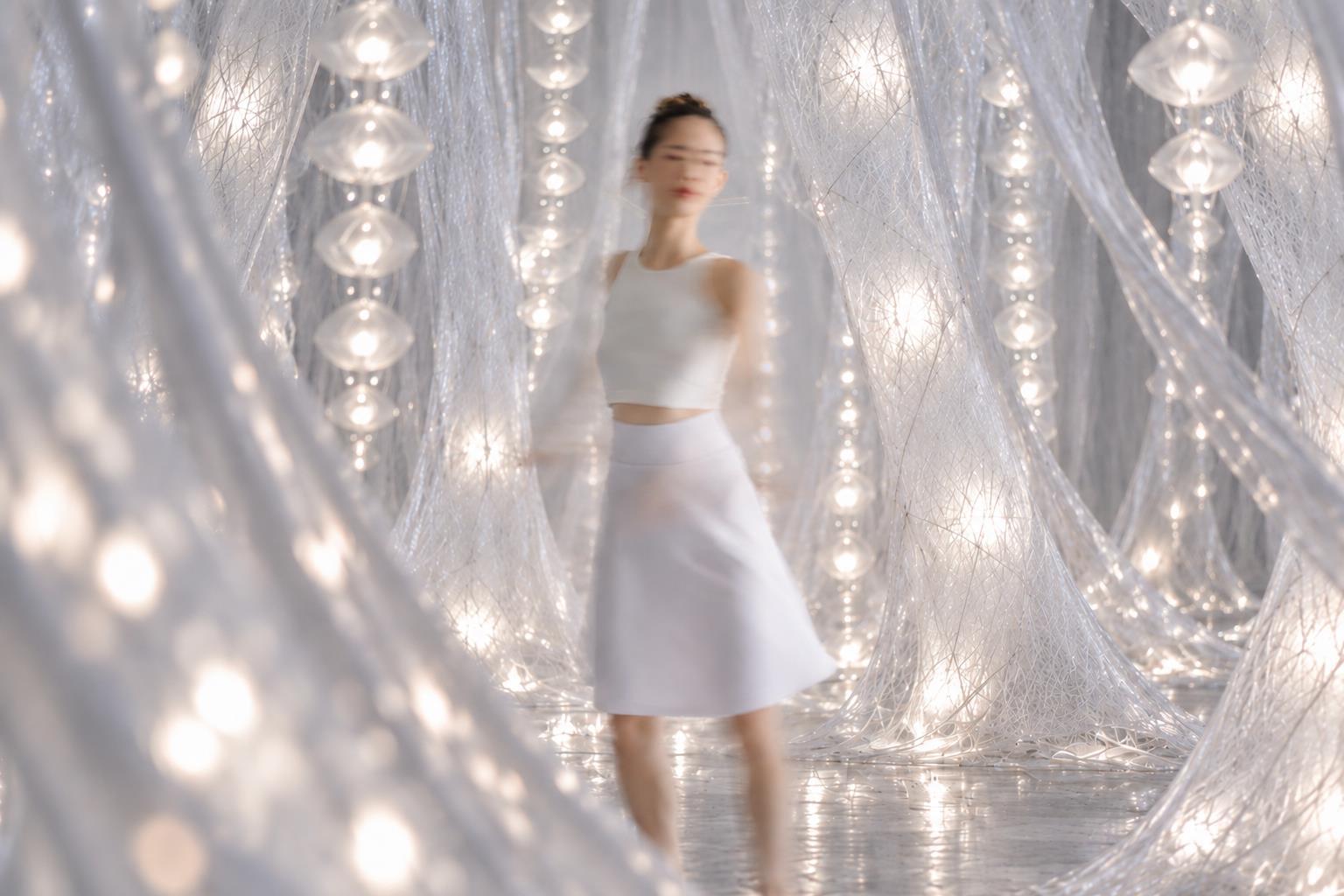
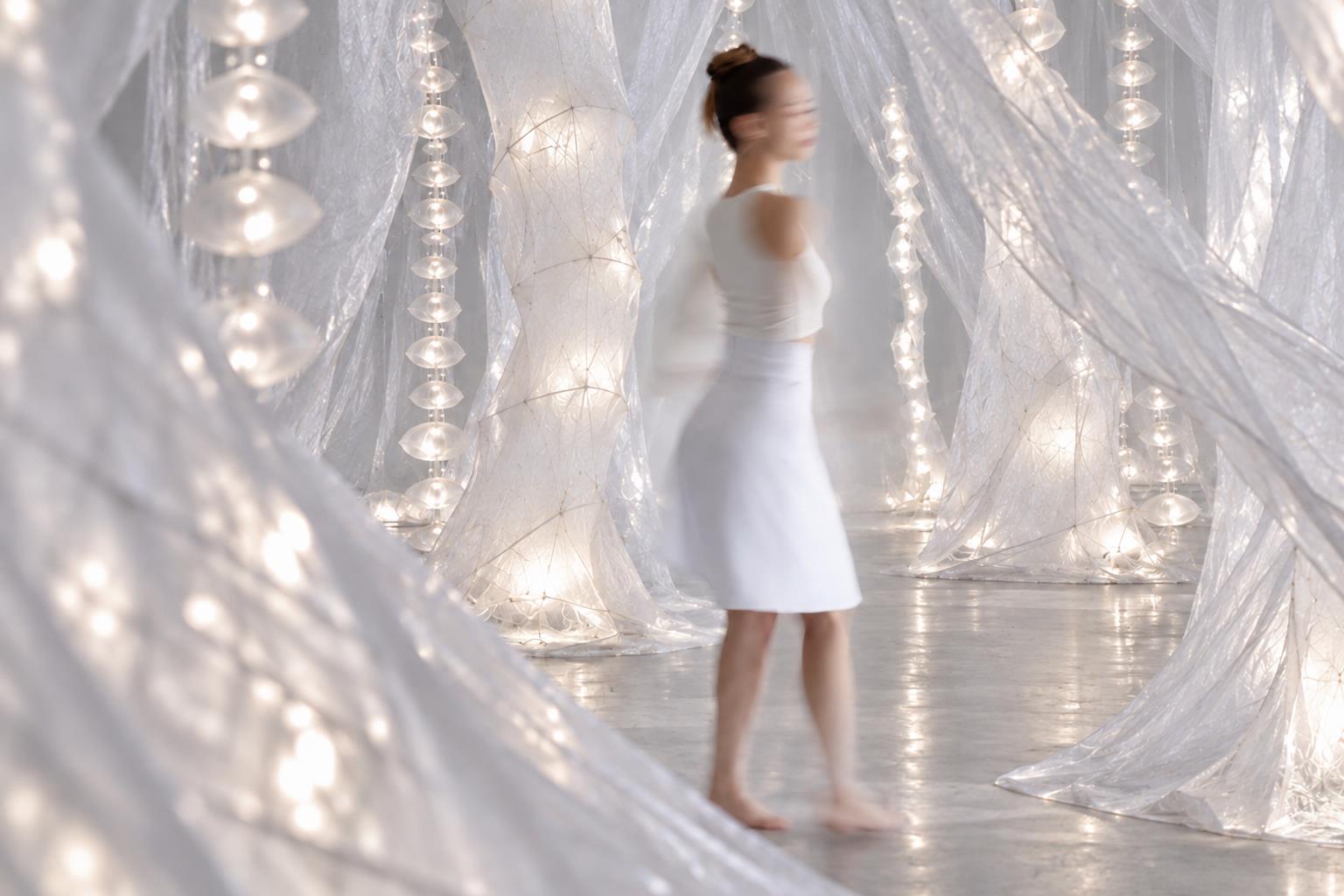
Soft forms glow in the half-light, like paper lanterns rising from the floor. Above them, translucent elements hang in the air, gently shifting between earth and ceiling. The scene is delicate, almost weightless: a space shaped by light, shadow and the suggestion of breath.
This is Susurrus, an AI-assisted installation concept by artist Hanghang Li. Its digital prototype was completed in 2026, while the physical installation—with light, translucent materials and live performance—is in development. The prototype offers an impression of an ethereal environment still to come: not a fixed object to view from outside, but an atmosphere visitors might enter and feel around them.
At the centre of the work is a question Li returns to in her artist statement: How does the body remember?
The answer, she suggests, may not be found in the mind alone. The body also holds experience—in the tension of muscle, the resilience of fascia, the depth of a breath, the curve of a spine. Bending and rising, carrying pain, enduring quietly, finding release: these moments may leave traces even when they are never put into words.
Li describes the body as a changing structure. It extends, twists, folds and breathes. Each movement can hold a story: not a neatly narrated memory, but a sensation that remains. In Susurrus, those invisible traces are given a spatial form. Ground-level structures rise like abstract sculptures, their translucent surfaces glowing softly. Elements suspended above them create a counterpoint, light enough to sway, yet present enough to shape the space. The materials help establish the work’s distinctive visual language. Tyvek and rice paper sit alongside organza, silk and optical fibre, creating surfaces that appear misty, fragile and permeable. Light moves through them in tones of warm white, soft amber, pale rose and ivory. The colours shift gradually, like the glow of a lantern changing as the air around it changes.
This is not light used simply to illuminate a room. It becomes the work’s emotional medium: a way to suggest what cannot be seen directly. Li writes that the light “breathes slowly,” lending the installation a rhythm that feels less like display than presence. The space is designed to make the body feel held—not by a literal enclosure, but by a gentle interplay of form, colour and air. The installation brings together two visual languages. On the ground, precise and geometric forms suggest what Li calls a “Western skeleton”: a clear structure that gives the space its framework. Above, organic, interwoven hanging elements evoke an “Eastern breath”—fluid, irregular and in motion. The contrast is not a division so much as an exchange. Structure makes room for softness; softness unsettles the certainty of structure.
At its centre, Li performs basic Pilates movements. Flexion, extension and rotation unfold slowly, guided by breath. The body articulates within the installation as light and forms respond, creating a relationship between movement and environment. Yet Li resists the conventions of spectacle. The performance is not presented as a demonstration of physical skill, nor as a story that needs to be explained. She describes it instead as listening: an attentive exchange between body and light, breath and material. That distinction shapes the audience’s role. Visitors are invited to witness, breathe and feel. They do not need to interpret the movement or search for a single meaning. As the boundary between performer and viewer softens, the installation begins to seem like a living body, while the moving body becomes part of the installation. The work asks its audience to notice what happens in the space between them: a breath, a small shift of weight, a change in light.
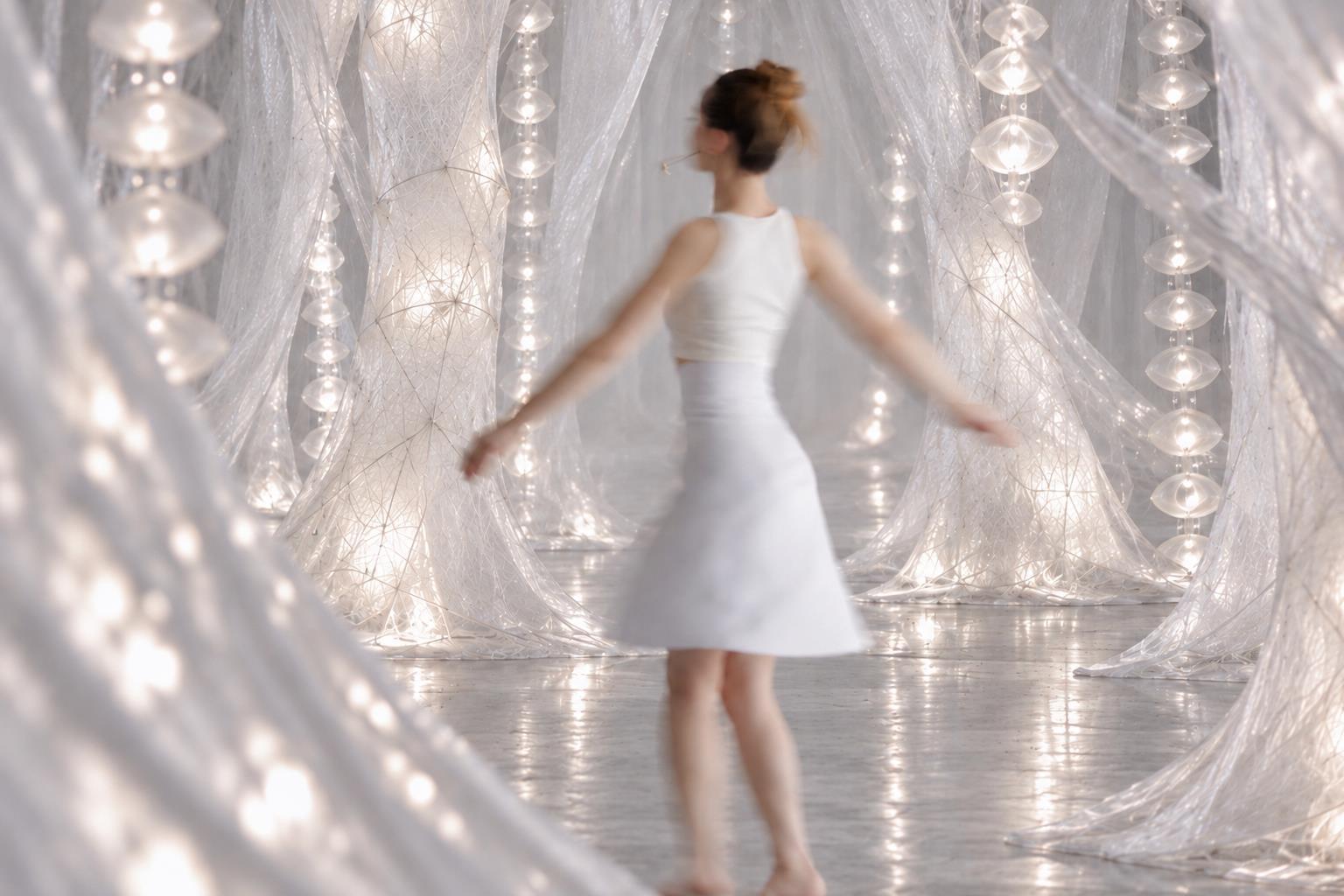
For Li, making bodily memory visible does not mean analyzing or treating it. Her aim is to create an environment in which it can be encountered quietly, “without judgment.” The work’s softness is central to that approach. Light passes through gauze-like material; the body unfolds within it; breath gives the scene its rhythm. Rather than explain experience, the installation offers a space in which sensation can be felt on its own terms. Li also describes beauty as a form of healing. In Susurrus, healing is not presented as a cure delivered by the artwork. It is something that may be awakened through the encounter itself: a feeling of safety, a moment of release, or the simple recognition of being present in one’s body. The work does not promise what a visitor will feel. It makes room for the possibility that something unspoken may be noticed.
The installation’s title suggests a soft, indistinct sound—a whisper or rustle barely heard. That quality is reflected in its proposed materials and movement. Nothing is designed to overwhelm. Instead, the space gathers subtle changes: a thread shifting, a colour warming, a body turning through a breath. The experience asks for attention, but not effort. It allows stillness to exist within movement.
Susurrus also continues Li’s exploration of sensory memory as a third dimension of the body, alongside strength and flexibility. That idea reframes the body not simply as an instrument to train, but as an archive of lived experience. Its records are not always visible, and they may not be easy to describe. Yet they persist in posture, breath and gesture—in the way a person bends, stands, pauses or begins again.
The digital prototype was developed in collaboration with Yuxin Su, whose role was AI visualization. Li retains authorship of the concept, creative direction, sensory design and movement methodology. In this process, AI serves as a collaborator for imagining the spatial environment, helping visualize possibilities before the physical installation is realized; it does not replace the artist’s authorship. The result is a work in which light does not merely show the body. It listens to it—or seems to. The glowing ground forms, suspended translucent elements and slow movement create a setting where the body’s quieter knowledge can come forward without being forced into language. This profound exploration of sensory memory is conceptualized and led by Hanghang Li. Through Susurrus, she brings together movement, material and light in an attempt to make the unseen gently perceptible: the memories held in the body, the stories carried in breath, and the possibility of meeting them with care.