Dreama is an AI-powered immersive experience concept by Helen Huang questioning the below:
What if a memory could become a landscape? What if an emotion could take shape as a place to enter, explore and experience?
Working across generative media, immersive experiences, product systems and cultural projects, Huang explores how emerging technologies can reshape imagination, identity, storytelling and human experience. Dreama begins with the inner life of the individual: emotional signals, memories and subconscious imagery. It transforms these personal fragments into dream experiences—worlds that are not simply watched from a distance, but imagined as environments that surround and engage the person.
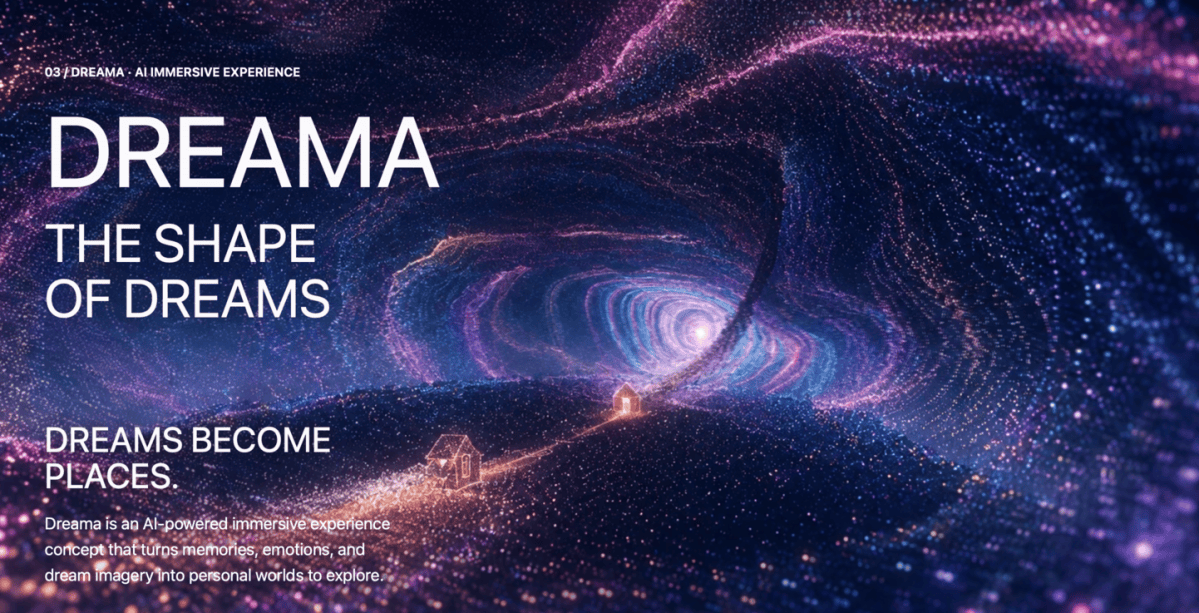
Its central idea is captured in a simple phrase: “Dreams become places.”
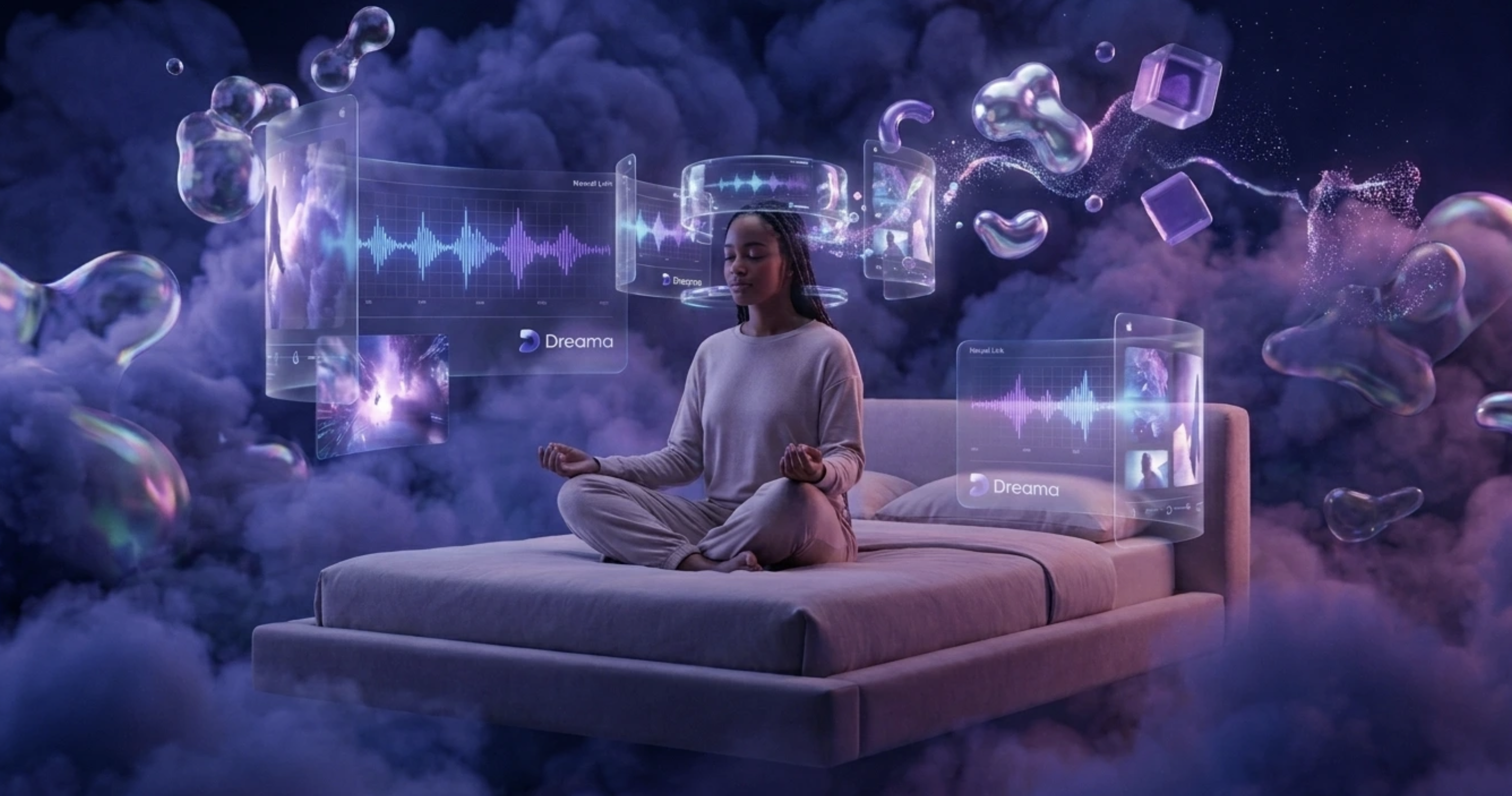
From interface to experience
Dreama is built around a shift “from interface to experience.” Rather than treating technology as a screen or a tool that sits apart from everyday life, the project imagines an interface that becomes part of the world around the person.
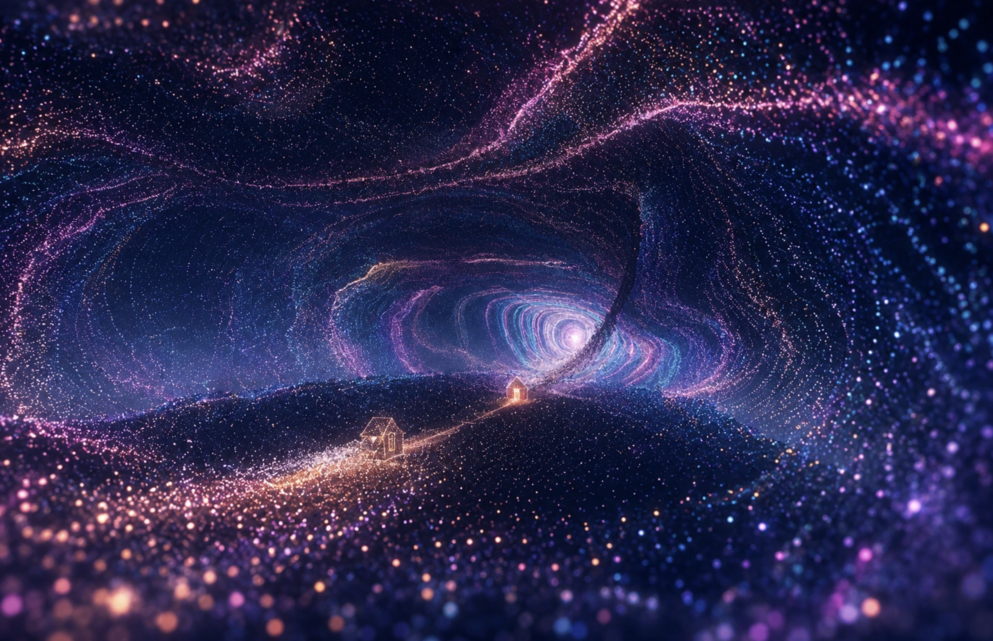
In Dreama’s visual language, an intimate human setting connects with an expansive imagined landscape. A familiar room or personal environment can open onto something vast, surreal and emotionally charged. The contrast brings the private and the boundless into the same frame: the person remains at the centre, while the dream world stretches beyond the limits of the everyday.
Interfaces become part of that environment, helping bring the dream into the space around the person. Instead of simply viewing an image on a screen, the participant is invited to encounter a larger atmosphere—one shaped by personal material and translated into an immersive visual experience.
This is what makes the project’s “interface to experience” idea more than a change in presentation. It suggests a different relationship between people and technology: one in which digital systems can become environments for exploration, reflection and storytelling.
Giving form to what is difficult to express
Dreama transforms emotional signals, memories and subconscious imagery into personal dream experiences. That starting point is significant. Emotions do not always arrive as clear stories, and memories can be incomplete, fleeting or difficult to put into words. Dreams, too, often combine fragments, associations and unexpected shifts in perspective.
By treating these elements as material for an immersive experience, Dreama explores how technology might help make the intangible perceptible. A feeling could influence the mood of a place; a remembered image might become part of a larger visual landscape; fragments of thought could come together in a world that feels at once strange and familiar.
The result is not simply an illustration of a person’s inner life. It is a proposal for encountering that inner life spatially. The imagined world becomes a setting in which memory and emotion can be approached from a new angle—not as fixed answers, but as experiences open to interpretation.
A human setting, an imagined landscape
The visual world of Dreama connects two scales: the intimacy of a human setting and the openness of an expansive imagined landscape. This relationship gives the project its emotional tension. The intimate setting anchors the experience in the recognisable, while the dream landscape introduces possibility, ambiguity and surprise.
That contrast also reflects the broader ambition of the project. Dreama brings emerging technology into contact with deeply human material. AI may support the translation of personal signals into new forms, but the meaning of those forms remains connected to the person experiencing them. The technology can help create the conditions for a dream world; the participant’s own memories, feelings and imagination give it significance.
This approach places human experience—not the technology itself—at the centre. Dreama asks how AI can contribute to an encounter with imagination, rather than simply demonstrate what AI can generate.
Showcasing Dreama in Paris
Huang showcased Dreama at Art Shopping Paris, the international contemporary art fair held at the Carrousel du Louvre. The event brings together artists and exhibitors from many countries and offers a meeting place for contemporary art, collectors and visitors with a wide range of interests.
Presenting Dreama in this setting brought the project into a broader cultural conversation. At a contemporary art fair, a technology-driven concept can be considered not only for its technical possibilities, but also for the questions it raises about creativity, perception and the role of art in everyday life.
The venue’s connection to Paris and the Louvre also creates a striking backdrop for a project concerned with how images and stories shape the way we see the world. Dreama’s own visual language moves between the familiar and the imagined, inviting viewers to think about how a personal inner world might become an experience that can be shared—while still remaining individual.
Art Shopping’s approachable atmosphere makes this kind of encounter especially relevant. The fair welcomes seasoned collectors as well as people discovering contemporary art for the first time. Dreama’s premise—turning memories, emotions and dream imagery into personal worlds—offers an accessible point of entry, even as it opens up complex questions about AI and human experience.
Questions that come with personal technology
A project that draws on emotional signals and memories also invites important questions. What information should a participant choose to share? How can they remain in control of their material? How should privacy and consent be handled when technology engages with something as personal as memory or emotion?
These questions are not separate from Dreama’s creative ambition. They are part of designing experiences that involve the inner lives of people. The more personal a technology becomes, the more important it is to consider how people understand, guide and protect their participation.
There is also a creative question at the heart of the project: how can AI introduce surprising imagery while ensuring that the experience still feels connected to the individual? Dreama points toward a balance between computational possibility and human interpretation. The technology may help shape a world, but that world’s personal meaning cannot be reduced to the process that produced it.
Imagining what comes next
Dreama offers a glimpse of a future in which technology does more than provide a screen, an interface or a finished image. It might help create environments for exploration—places where people can encounter memory, emotion and imagination in new ways.
Through Dreama, Helen Huang brings together generative media, immersive design and a human-centred approach to emerging technology. The project’s movement “from interface to experience” proposes that digital tools can become part of the spaces we inhabit, opening pathways between the familiar world and the worlds we imagine.
Dreama asks us to reconsider what an interface can be. It might be a threshold rather than a boundary: a way into an experience shaped by the person who enters it. And when dreams become places, technology becomes not only something we use, but something that can help us explore the landscapes within us.